Pediatric Wheelchairs
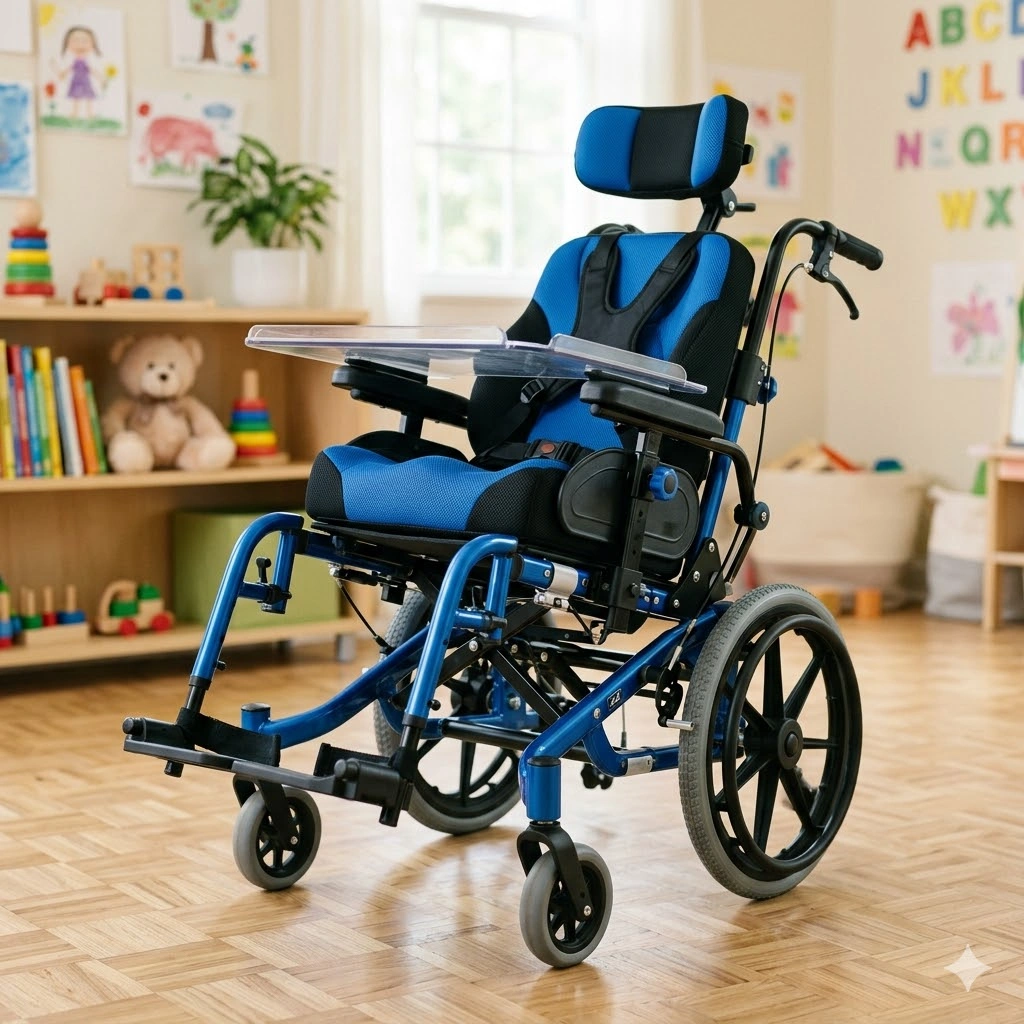
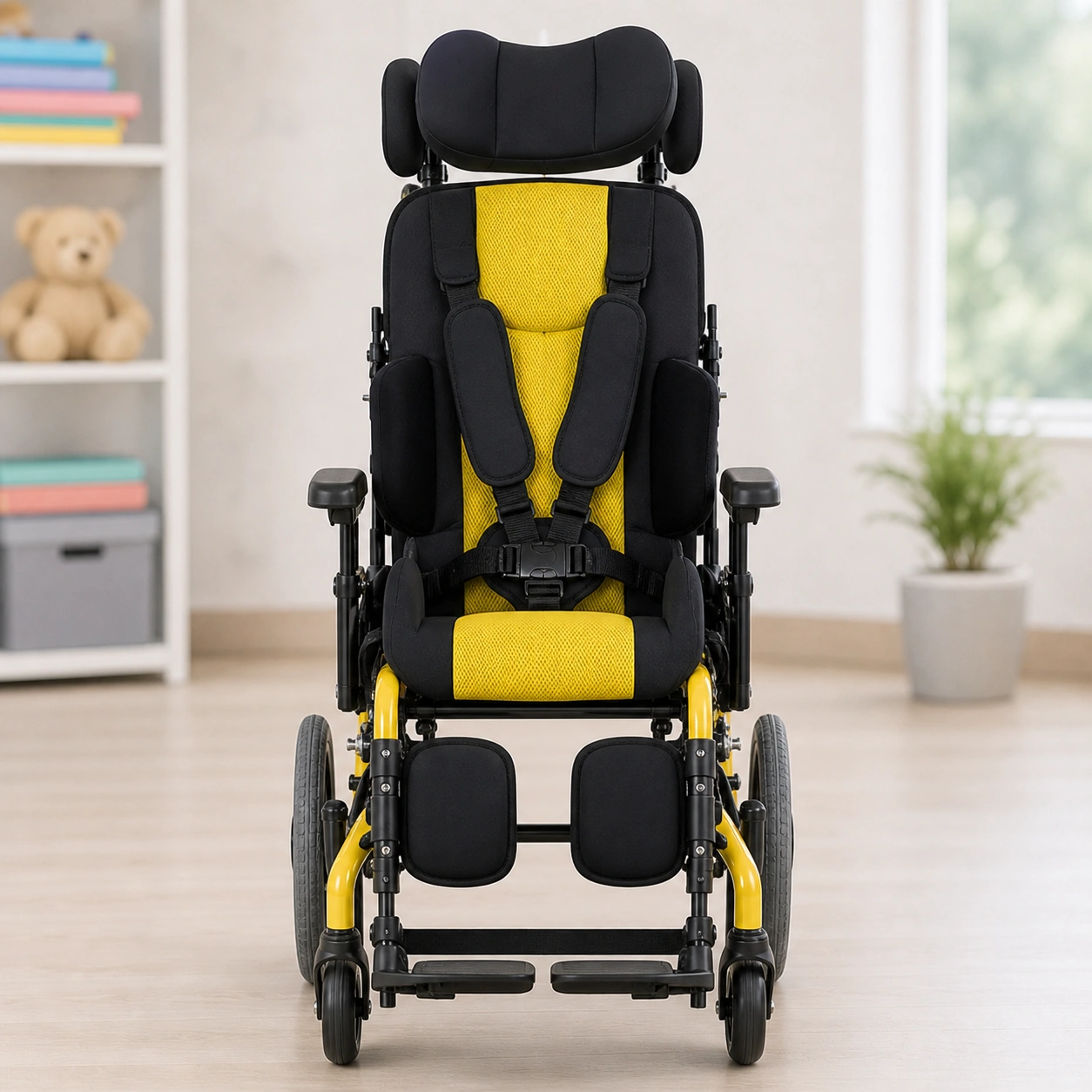
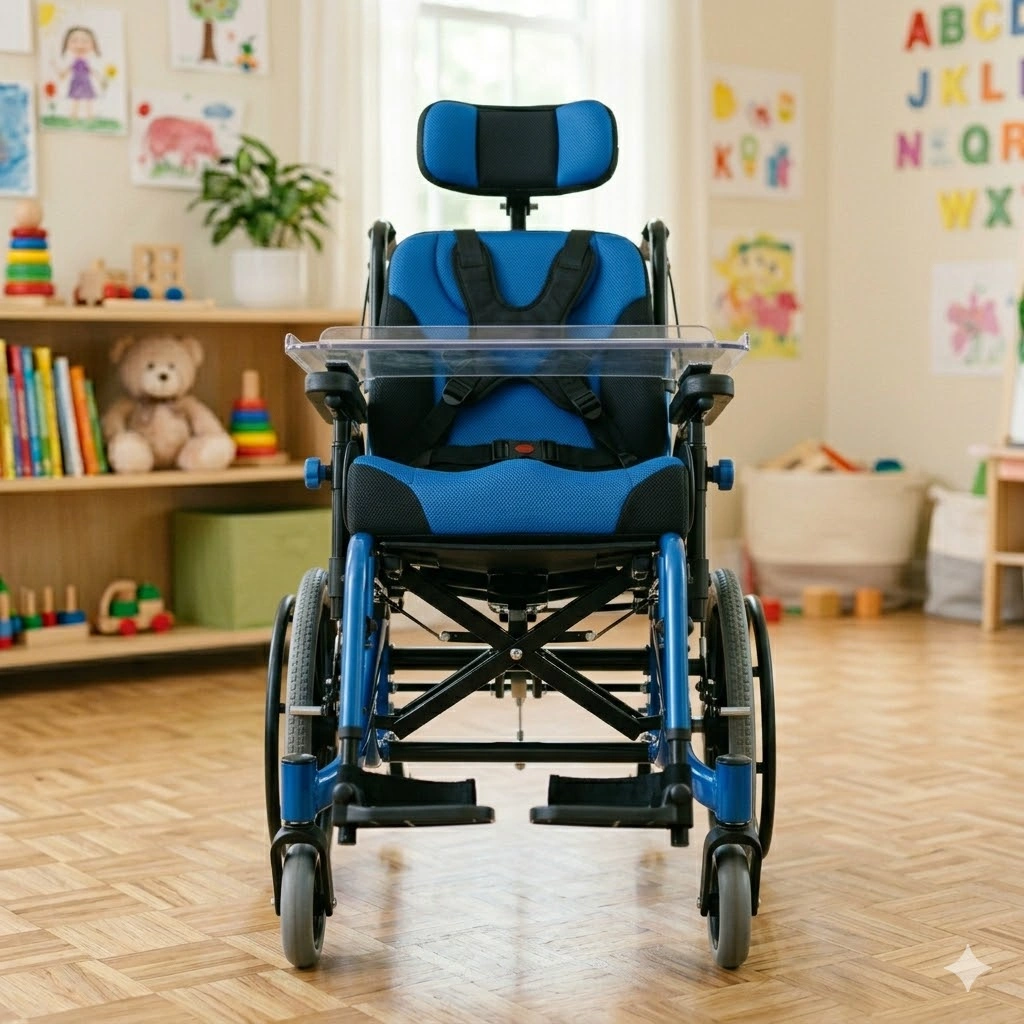
The Tilt-in-Space Pediatric Wheelchair is the most clinically advanced manual wheelchair available for children in India. Unlike any other wheelchair type, the tilt-in-space mechanism tilts the entire seating system — seat and backrest together — backwards at angles from 0° to 45°, while keeping the child's hip angle constant. This is the critical distinction: the child's carefully maintained postural alignment at the hip remains intact even during tilt, making this wheelchair the only option suitable for children who need both pressure relief and postural management simultaneously — particularly those with cerebral palsy, spina bifida, and spinal muscular atrophy.
This wheelchair is recommended by paediatric physiotherapists and occupational therapists in India for children who: (1) sit for extended hours daily and are at risk of pressure sores, (2) have reduced or absent skin sensation due to spina bifida or spinal cord conditions, (3) have complex postural needs where hip angle must be maintained during rest — typically moderate to severe CP, (4) have spinal muscular atrophy or muscular dystrophy causing progressive trunk weakness, or (5) experience significant fatigue from maintaining upright posture and need periodic rest without transfer or alignment disruption.
Your physiotherapist will prescribe a tilt schedule based on your child's skin integrity, activity level, and condition. As a general guideline: children with reduced sensation (spina bifida) should tilt to 30°+ for at least 15–20 minutes every 1–2 hours. Children with intact sensation but fatigue issues (CP, SMA) may tilt for 10–15 minutes every 2–3 hours. The tilt mechanism locks securely at any angle, allowing caregivers to set and maintain the prescribed position without continuous monitoring.
| Frame Material | Powder Coated Steel / Aluminium Alloy (model dependent) |
| Tilt Range | 0° to 45° (full range, lockable at any angle) |
| Tilt Mechanism | Caregiver-operated rear lever (smooth, lockable) |
| Hip Angle During Tilt | Constant 90° – does not change during tilt |
| Seat Material | Padded Moulded Seat with Vinyl Cover |
| Backrest | High Padded Back – Full Spine Support |
| Headrest | Padded Adjustable Headrest (height & angle) |
| Trunk Supports | Lateral Padded Trunk Supports (adjustable pair) |
| Seat Width | Adjustable 14–18 inches |
| Seat Depth | Adjustable 12–16 inches |
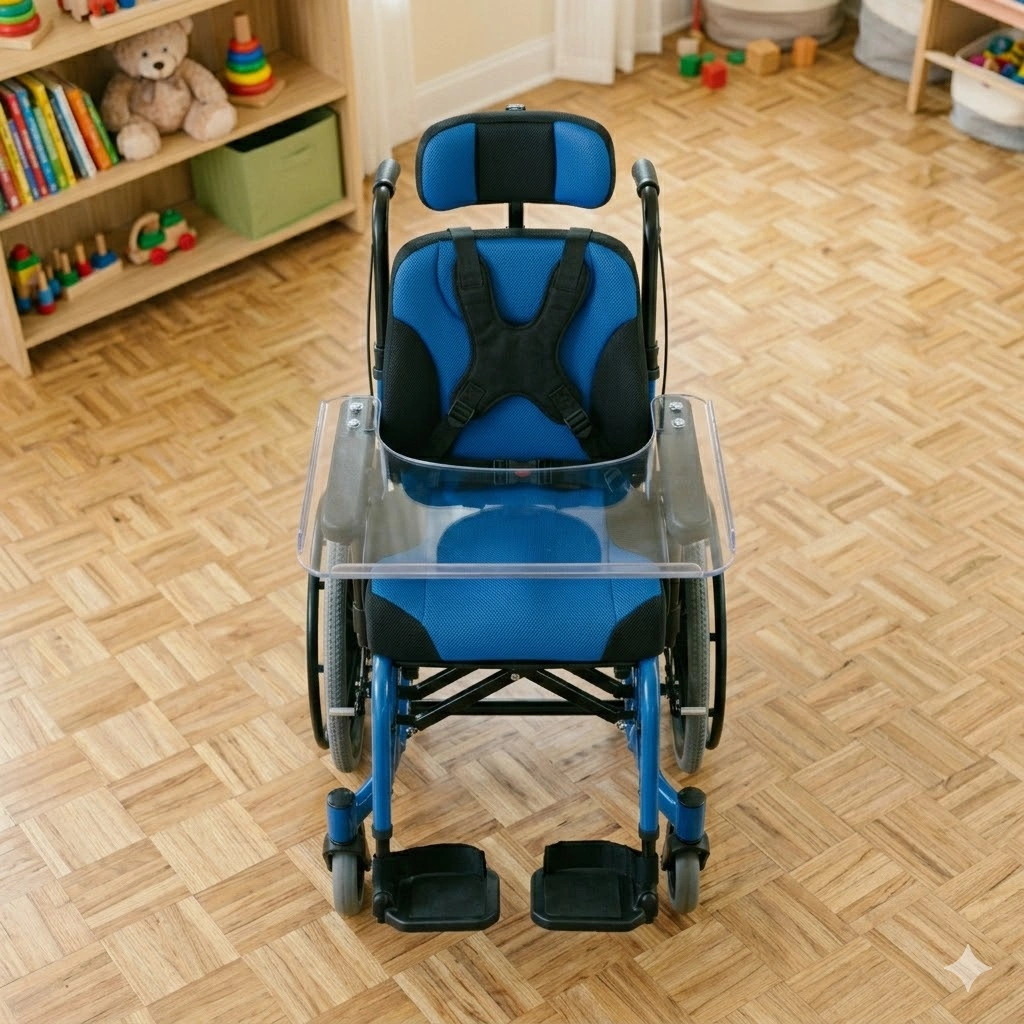
| Safety Harness | 5-Point Safety Harness (all straps adjustable) |
| Footrests | Swing-away Footrests with Ankle Straps |
| Weight Capacity | 60–75 kg (model dependent) |
| Product Weight | Approx. 18–24 kg (with tilt mechanism) |
| Front Wheels | 6" Swivel Caster Wheels |
| Rear Wheels | 20" Spoke Wheels |
| Brakes | Push-lock Rear Wheel Brakes |
| Foldable | Yes – Cross-brace Folding Frame |
| Suitable Age | 3–16 years (condition dependent) |
| Warranty | 6 Months on Frame + Tilt Mechanism |
| Starting Price | ₹28,000 (contact for latest price) |
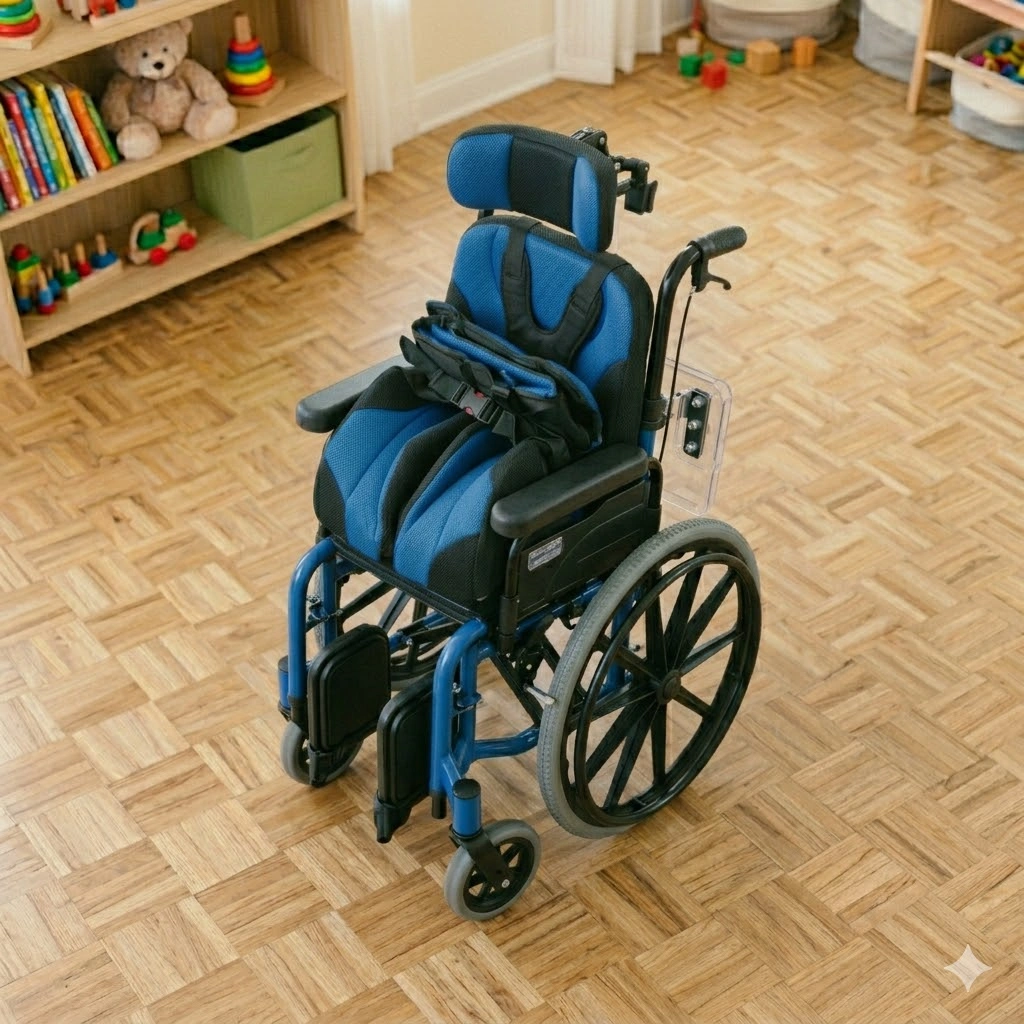
The entire seating system tilts backward from upright to 45° in a smooth, controlled movement operated by the caregiver. Locks securely at any angle in between — allowing the prescribed tilt position to be maintained consistently throughout the day.
Unlike reclining, tilt-in-space keeps the hip angle at 90° throughout the tilt — the child's postural alignment, trunk support positioning, and seating geometry are all preserved during rest. This is the clinically critical difference for children with CP and complex postural needs.
At 30°–45° tilt, pressure at the ischial tuberosities (sitting bones) and sacrum reduces by 60–85%, significantly reducing pressure sore risk for children with reduced skin sensation — particularly those with spina bifida, spinal cord injury, or prolonged immobility.
Height and angle adjustable padded headrest maintains correct head alignment in both upright and tilted positions. Essential for children with poor head control — the headrest adapts to the tilt angle to keep the airway clear and visual field maintained.
Adjustable padded lateral trunk supports maintain midline trunk positioning during both upright sitting and tilted rest. They move with the tilt mechanism, ensuring the child's trunk remains correctly supported at all tilt angles — no re-adjustment needed after tilting.
Fully adjustable 5-point harness prevents the child from sliding or repositioning during tilt. Particularly important when tilting children with hypotonia or involuntary movements — the harness keeps them safely positioned without restricting breathing.
Regular tilt cycles during the school day reduce the energy children with CP and SMA spend maintaining upright posture. Studies show tilted rest periods improve alertness, attention, and participation in activities — making this clinically valuable beyond just pressure management.
Seat width, depth, headrest height, trunk support position, footrest height, and harness length all adjustable — the wheelchair grows with the child and accommodates the postural changes that naturally occur as children with neurological conditions develop.
A tilt-in-space wheelchair tilts the entire seating system — both seat and backrest together — backwards at angles from 0° to 45°, while keeping the child's hip angle constant. This redistributes body weight from the sitting bones to the back and shoulders, significantly reducing pressure. Unlike reclining, which opens the hip angle, tilt-in-space maintains all postural settings — making it the preferred choice for children who need both pressure relief and postural management at the same time.
Tilt-in-space maintains the hip-to-trunk angle during rest, keeping the child's carefully adjusted postural alignment intact. When a reclining wheelchair tilts back, the hip angle opens — which causes the pelvis to slide forward in children with CP, undoing the positioning work. Tilt-in-space avoids this entirely. Physiotherapists in India routinely recommend tilt-in-space over reclining for children with moderate to severe CP because it preserves postural management while providing rest.
Research shows 15°–20° of tilt begins reducing pressure meaningfully. For significant pressure relief at bony prominences (sacrum and ischial tuberosities), 30°–45° of tilt is recommended. Children with reduced sensation due to spina bifida or spinal cord conditions should be tilted to 30°+ for at least 15–20 minutes every 1–2 hours. Your physiotherapist will prescribe a tilt schedule specific to your child's skin condition and daily routine.
Yes — tilt-in-space is particularly important for children with spina bifida because the reduced or absent skin sensation in the lower body means they cannot feel pressure building up, making them highly vulnerable to pressure sores. Regular tilt cycles redistribute pressure and allow skin recovery. The tilt-in-space mechanism is specifically recommended over reclining for spina bifida because it maintains hip positioning during tilt — important for children who may also have hip instability.
Tilt-in-space pediatric wheelchairs in India start from ₹28,000 for a standard manual model with 0°–45° tilt, headrest, trunk supports, and 5-point harness. Premium modular seating systems with power-assist tilt and wider adjustability range from ₹40,000–₹80,000. WhatsApp WheelchairDealer.in with your child's age, weight, diagnosis, and city — we'll recommend the right model at the right price.
Yes. We deliver pan-India including all metros and Tier 2/3 cities. Tilt-in-space wheelchairs are carefully packaged — delivery takes 3–5 working days for metros and 5–8 days for other cities. After delivery, our team will guide you through assembly, tilt mechanism operation, and initial adjustment over a WhatsApp video call. We also help connect you with a local physiotherapist for final fitting if required.
My son has spastic quadriplegia and our physiotherapist insisted on a tilt-in-space wheelchair after we found early signs of sacral pressure. Since switching to this chair 8 months ago, his skin integrity has been perfect and his alertness during school has improved visibly. The tilt mechanism is smooth and easy to operate. The whole team at WheelchairDealer.in guided us through the setup over video call — excellent support.
My daughter has spina bifida at the L3 level and has no sensation in her lower body. Pressure sores were a constant worry with her previous wheelchair. The tilt-in-space system has completely changed this — we follow the 30° tilt every 2 hours as prescribed and she has had zero skin issues in the 11 months since. The chair is solid, well built, and the headrest and harness are very comfortable for her.
Best wheelchair we have used for our 11-year-old with SMA. The tilt mechanism is a game changer for managing fatigue — she can rest in the tilted position during lunch break at school without losing her seating alignment. Her teachers have noticed she is more attentive in afternoon classes since we started using the tilt schedule. Worth every rupee of the investment.
I recommend this tilt-in-space wheelchair to appropriate pediatric patients in my clinic. The build quality is reliable for the price point in India. The tilt mechanism operates smoothly and locks securely. Adjustments for seat depth, width, headrest, and trunk supports are straightforward. The after-sales support from WheelchairDealer.in has been helpful for the families I've referred. Good option for families who need a tilt system without importing.
Our specialist will help you understand which system is right for your child's specific condition — free consultation, no pressure.